Garage Door Repair Hugo MN › Torsion vs Extension Springs
Torsion vs Extension Garage Door Springs: Which Do You Have?
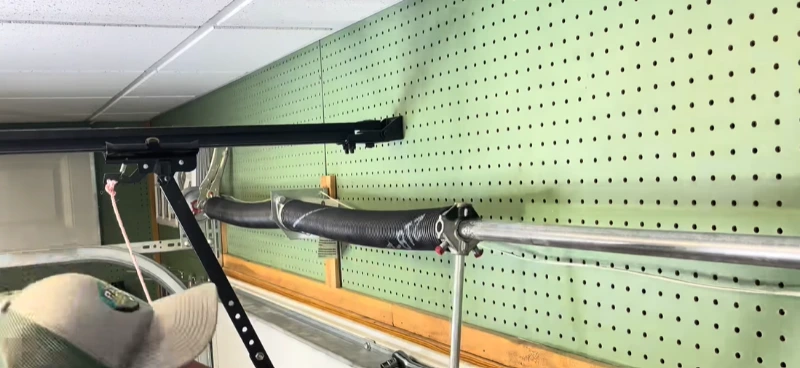
Look above the closed door. A bar with coiled springs means torsion springs. Long springs along the side tracks mean extension springs. Either way, spring work is a job for a trained technician.
Two types and where each one sits
Pairs why they wear out together
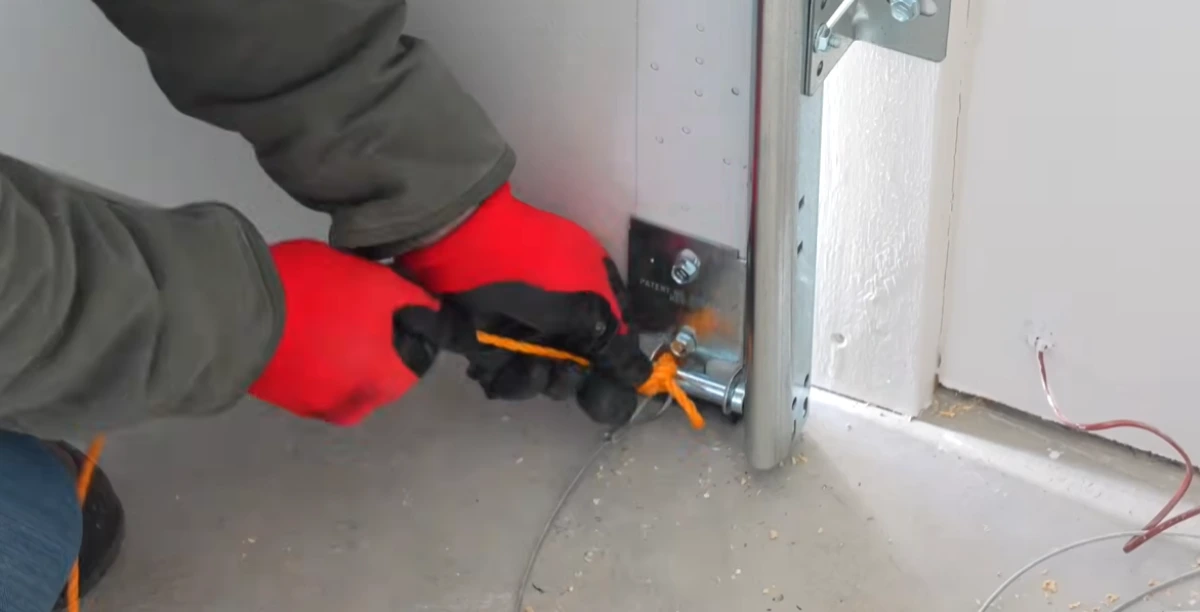
Safety cable for extension springs
Sourced DASMA and manufacturers
What is the difference between torsion and extension springs?
Torsion springs are mounted on a bar above the door and twist to lift it. Extension springs run along the sides of the horizontal tracks and stretch. Amarr, a door manufacturer, says torsion springs are the more durable type and that extension springs are found mostly in older homes.
Knowing which you have helps you describe the problem on the phone and understand what a repair involves. It does not make either type safe to work on yourself. Unfamiliar terms are explained in the garage door parts glossary.
How to tell which spring you have
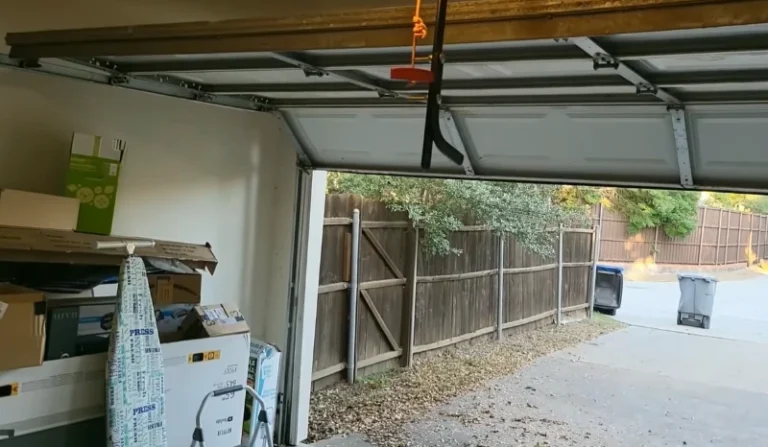
Amarr describes torsion springs as running parallel to the door above it, on a bar or tube with cones at the ends. Extension springs sit along the sides of the horizontal tracks, with pulleys and cables. If you cannot see a bar with coils above the door, and you can see long springs at the sides, you have extension springs.
Do this from the floor with the door closed. Do not touch the springs, the cables or the brackets to check. They are under tension even when the door is still.
How long do garage door springs last?
Amarr says standard residential springs are rated for about 10,000 cycles, which it puts at roughly seven years of normal use. A cycle is one opening and one closing. DASMA, the industry trade group, does not publish that figure in its public technical sheet, so treat 10,000 as a manufacturer number, not an industry rule.
The practical point is that a spring has a limited number of cycles. A household that opens the door several times a day uses them up faster than one that opens it once. When a spring is near the end of its rating, it can fail without warning.
For what a spring repair costs, with sources, see garage door repair cost, and for the repair itself see spring repair.
Why springs are replaced in pairs, and what a safety cable does
DASMA advises replacing both springs together if one shows wear, because springs of the same age and use are close to the same point in their life.
DASMA also says a door with extension springs needs a safety cable running through each spring. If a spring breaks, the cable keeps it from whipping across the garage. If your extension springs have no cable, DASMA advises having the door inspected by a professional.
Do Minnesota winters wear out springs faster?
DASMA says doors in very hot or very cold climates should be kept closed when possible. Amarr says temperature swings speed up wear on springs. One Colorado door company goes further and says cold makes high-carbon steel springs brittle, but that is a company view, not a published standard.
The safe conclusion is modest: winter is hard on a door, and a spring that is close to the end of its rating is more likely to give out on a cold morning. The winter care guide covers what to check.
Who should replace a garage door spring?
DASMA calls springs the most dangerous part of the door and says spring replacement should be done only by a trained door systems technician. It is not a job for a first attempt.
Fine to do yourself
- Look at the door from the floor
- Note the spring type and any cable
- Write down what you heard or saw
- Take a photo from a safe distance
Leave to a technician
- Touching, adjusting or unwinding a spring
- Replacing one spring without the other
- Cables and bottom brackets under tension
- A door that is heavy or will not stay up
For a door that is stuck and needs help now, see emergency garage door repair. If the door will not lift and you need to get it open, see how to open a garage door manually, and check the door first.
Torsion and extension springs: common questions
Which type is better?
Amarr says torsion springs are the more durable type. Which one suits a door depends on its size and weight, so a technician should choose.
Can I replace just one spring?
DASMA advises replacing both together if one shows wear.
Are extension springs dangerous?
All springs are under tension. DASMA says extension springs need a safety cable through them so a broken spring does not fly loose.
How do I know if a spring is broken?
A loud bang, a door that feels very heavy, or a door that will not lift can all point to a broken spring. See why a garage door is not working.
What is a cycle?
One opening and one closing of the door.
If you are unsure what you are looking at, call and describe it. Do not touch the springs or cables.
Call about a garage door spring
Say which spring type you think you have, what you heard and what the door is doing.
What to have ready
- Your address and the nearest cross street
- Torsion bar above the door or springs at the sides
- Any bang, gap in a coil or slack cable
- Age of the door, if you know