
Garage Door Repair Hugo MN › Tune-Up
Garage Door Tune-Up and Maintenance Hugo MN
A garage door is the biggest moving part in the house, and it gets used more than most people realize. A little attention once a year, ideally before the first freeze, is the cheapest way to avoid a bang and a stuck door on a cold morning. Here is what to check, what to leave alone and when to do it in Hugo.
Checked before the freezeFall is the best time
Price before we startWritten, and you approve it
Balance and safety testedNot just lubricated
Based in Hugo5564 152nd St N
What does a garage door tune-up include?
A good tune-up is more than a can of lubricant. A technician looks at every moving part, tests the safety features and tells you what is wearing out while it is still cheap to fix.
- Springs, cables and the drums and brackets they run through: checked for wear, rust and fraying.
- Rollers, hinges and the track: checked for wear, loose hardware and alignment.
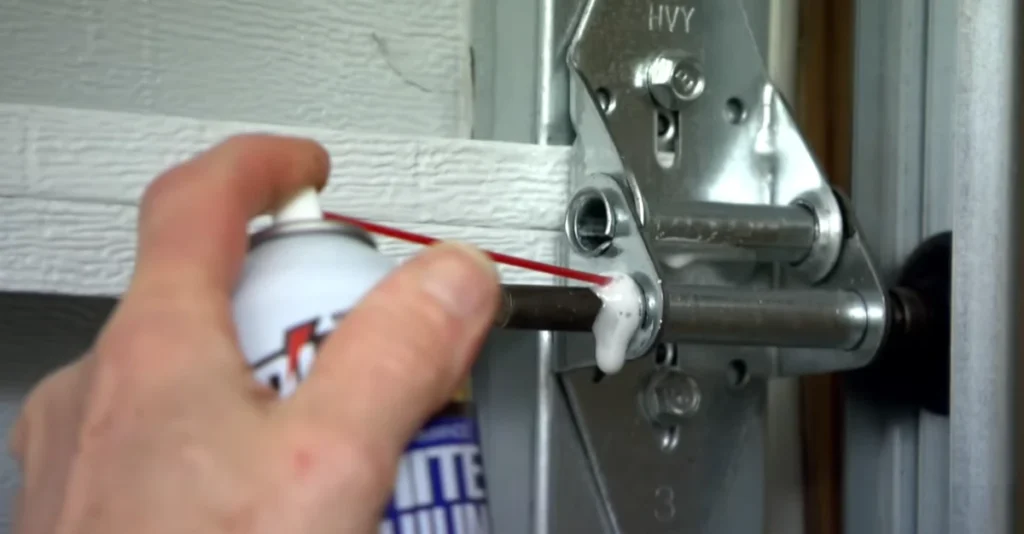
- Lubrication of hinges, roller bearings and springs with the right product.
- Balance: disconnect the opener and check that the door stays where you leave it.
- Safety reversal: test the door reverses when it hits an obstruction.
- Sensors and opener: check the photo eyes, the travel and force, and the opener rail, chain or belt.
- Bottom seal and weatherstripping: checked for cracks and gaps.
Most of these are found on the checklists that manufacturers publish. Wayne Dalton describes a 21 point inspection, and DASMA publishes a safety guide with monthly checks for homeowners.
What can I do myself, and what should I leave alone?
| You can | Leave to a technician |
|---|---|
| Look over the door for wear, gaps and loose hardware each month | Anything on the springs, including adjusting or replacing them |
| Wipe dirt off the track, without lubricating it | Cables, drums and the bottom brackets, which are under heavy tension |
| Lubricate hinges, roller stems and springs lightly | Bent track, cracked panels or a door that is off balance |
| Test the auto reverse and the sensors | Opener repair, logic boards and wiring |
| Try the release cord and lift by hand to test balance, if safe | Broken springs, snapped cables or a door that is off track |
DASMA says springs are under high tension and only qualified people should adjust them. Read garage door spring repair for why. See DIY garage door repair: what is safe and what needs a pro for the full list with sources.
Want it checked before winter? Call and we will tell you what a tune-up costs and when we can be there.
How do I test the balance and the auto-reverse?
Two quick checks are worth doing monthly and after any adjustment: lift the door by hand with the opener disconnected to see whether it stays put about halfway (DASMA), and lay a 2×4 flat in the doorway to see whether the door reverses when it touches (Chamberlain, DASMA, CPSC). Do not adjust the springs yourself, and do not run the balance test if you heard a bang or see a gap in a spring. The full step-by-step versions, including the photo eye test, are on the garage door safety tests page.
What do I lubricate, and with what?
| Part | Lubricate? |
|---|---|
| Hinges | Yes, lightly |
| Roller bearings and stems, steel rollers | Yes, lightly |
| Springs | Yes, lightly, but many people leave springs to a pro |
| Nylon rollers | No (Clopay) |
| Track | No, wipe clean instead (Clopay) |
| Rubber belt on the opener | No |
Use a silicone based lubricant made for garage doors. White lithium is acceptable but gathers debris, and WD-40 and oil based products are best avoided (Clopay). Re-lubricate every three to six months. Garage Journal posters say about twice a year and warn that grease traps grit. See our noisy door page for what each sound means.
When should I do it in Minnesota?
Fall, before the freeze. The Twin Cities median first 32 degree night is October 9 to 12 (Minnesota DNR), so late September into early October is a good window. The average first below zero reading lands around December 9 (Minnesota DNR). Here is how the year lines up.
| When | What to do |
|---|---|
| September to early October | Full tune-up before the first freeze. Check the bottom seal. |
| November to December | Watch for stiff or slow operation. Keep the bottom of the door clear of slush and snow. |
| January and February | Check after any thaw. The Twin Cities has a January thaw in about 82 percent of winters (Minnesota DNR), which puts water on the door and freezes it again. |
| April | Last spring freeze is around April 24 to 27 (Minnesota DNR). Wipe off salt residue and check for rust. |
| Summer | Light lubrication, sensors and monthly tests. |
Those dates are Twin Cities medians. Hugo sits about 18 miles north of downtown St. Paul, so allow for the odd earlier frost.
How do I care for the door in winter?
Cold thickens lubricant and stiffens the door, and Clopay says cold makes spring wire more brittle, which is one reason more springs give out in the first hard freeze. Do not force a frozen door. Angi suggests warm water at the bottom and a hair dryer six to twelve inches away. On salt, sources disagree: Clopay says avoid ice melt on metal doors, while Angi says a magnesium chloride melt is acceptable and to avoid rock salt. We suggest keeping salt off the door, the tracks and the springs altogether, since the Twin Cities spreads around 365,000 tons of road salt a year (Minnesota Pollution Control Agency). See weather seal replacement and a frozen door.
How much does a tune-up cost?
Published estimates, not quotes and not fixed prices. The door, the number of parts and any extra work change the total.
| Item | Typical range | Source |
|---|---|---|
| Tune-up, national | $100 to $240, average $190 | Angi |
| Standard tune-up | $100 to $150 | HomeGuide |
| Premium tune-up | $150 to $250 | HomeGuide |
| Labor rate | $75 to $150 an hour | Angi |
Compare that with the cost of the repairs it heads off on our repair cost page.
What not to do
- Do not grease the tracks or use WD-40.
- Do not force a frozen door.
- Do not touch the springs, cables or the brackets at the bottom.
- Do not pressure wash the tracks in winter.
- Do not test the reverse with a roll of paper towels.
Garage door tune-ups near Hugo
We are based on 152nd Street North and work across Hugo and the towns around it.
- Hugo
- Lino Lakes
- Centerville
- Columbus
- Forest Lake
- White Bear Lake
- Stillwater
See the full service area.
Garage door maintenance questions
How often should a garage door be serviced?
Wayne Dalton and HomeGuide recommend a professional service about once a year, while Angi says every other year or whenever there is a problem. In Minnesota, once a year before the first freeze is the sensible pick. Homeowners should inspect and test the door monthly (DASMA).
How much does a garage door tune-up cost?
Angi puts it at $100 to $240, averaging $190, and HomeGuide at $100 to $150 for a standard tune-up and $150 to $250 for a premium one. Those are national figures. Your written price is confirmed before we start.
Is a garage door tune-up worth it?
Usually. It costs less than most repairs and it catches worn springs, cables and rollers before they fail on a cold morning.
What does a garage door tune-up include?
A visual check of springs, cables, rollers, hinges, track and hardware, lubrication of the moving parts, a balance test, a safety reversal test, and a check of the opener and sensors.
Can I tune up my garage door myself?
Some of it, yes. You can inspect, clean the tracks, lubricate and test the safety reversal. Springs, cables and the brackets they attach to are for a technician only.
What lubricant should I use on a garage door?
A silicone based lubricant made for garage doors. Clopay says white lithium is acceptable but gathers debris, and to avoid WD-40 and oil based products. Do not lubricate the tracks or nylon rollers.
How do I test the auto-reverse on my garage door?
Lay a 2×4 flat on the floor in the door’s path and close the door. It should reverse when it hits. Chamberlain describes a 1 inch board, while DASMA and the CPSC specify a 2×4. Do not use a roll of paper towels, which DASMA says may not compress enough.
Call to book a garage door tune-up in Hugo
Tell us how old the door is and whether anything has changed lately. We will tell you what a tune-up includes, give you the price first and set a time.
Garage Door Repair Experts
5564 152nd St N, Hugo, MN 55038
Email: garagedoorexperts@hugogaragedoorrepair.com
What to tell us when you call
- How old the door and opener are
- Anything noisy, slow or crooked lately
- One car or two car door
- Your street or Hugo neighborhood