
Garage Door Repair Hugo MN › Opener Installation
Garage Door Opener Installation Hugo MN
Installing a new opener is more than bolting a motor to the ceiling. The door has to be balanced, the outlet has to be right, and the safety sensors and auto-reverse have to be set and tested. This guide follows the manufacturers’ own manuals and shows published costs.
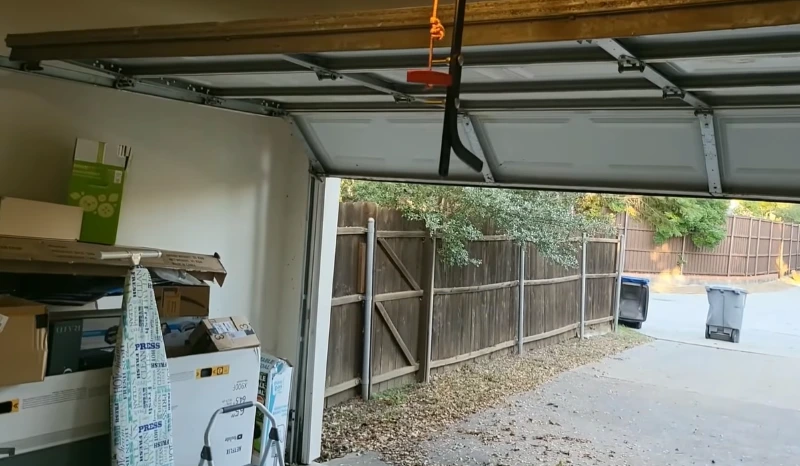
Manufacturer manuals LiftMaster and Genie instructions
Safety tests sensors and auto-reverse explained
Sourced prices installed cost ranges compared
No permit guess the city’s page is silent on openers
Repair the opener or replace it?
Most openers last 10 to 15 years with maintenance (HomeAdvisor, HomeGuide, Angi). ConsumerAffairs advises replacing when repairs pass about half the cost of a new unit. If the door itself is the problem, a new opener will not fix it. See opener repair for the full repair-or-replace checklist, and opener types and features to choose a replacement.
What garage door opener installation involves
Manufacturer manuals and installation guides describe roughly the same sequence.
- Disconnect power and remove the old opener, rail and brackets
- Assemble the rail and carriage and attach the rail to the motor unit
- Fix the header bracket to solid framing with lag screws
- Hang the motor unit from the ceiling framing with straps or brackets
- Attach the door bracket and connect the arm
- Mount the safety sensors low on each side of the door and wire them
- Mount the wall control and wire it
- Plug in and set the travel and force limits, then program remotes and keypads
- Test the balance, the sensors and the auto-reverse before using the door
Sources: A1 Garage, Precision Door, and the LiftMaster and Genie installation manuals.
Before the opener goes in: balance and power
Door balance
An opener is meant to guide a door, not carry it. LiftMaster says a properly balanced door stays at any point of travel supported entirely by its springs. Genie’s manual describes lifting the door halfway and releasing it: it should stay or move only slowly. If the door falls or binds, contact a technician. Genie also says not to attempt to remove, repair or adjust springs or attached parts. See spring repair.
Power
LiftMaster and Genie both say the opener plugs into a grounded outlet, and Genie says the outlet should be within about 3 feet. If there is none, both say to use a qualified or licensed electrician and not to alter the plug. HomeGuide puts running power to a garage with no outlet at $10 to $25 per linear foot.
Some cities require GFCI protection on garage outlets. St. Paul does, including outlets for openers, and requires an electrical permit for new or modified garage circuits. That is St. Paul only, and no such rule was found for Hugo, so ask the city.
Safety sensors and auto-reverse: set them, then test them
The LiftMaster manual says the sensors should be no higher than 6 inches above the garage floor, and Genie’s says 5 to 6 inches. The 6-inch figure comes from manufacturer instructions and UL 325, not from the federal rule text.
Two-minute test after installing
- Lay a 1-1/2 inch board, or a 2 by 4 flat, in the door path
- Close the door: it must reverse on contact with the board
- Break the sensor beam while closing: the door must stop and reverse
- Check that both sensor lights stay steady
- Repeat monthly, as the CPSC recommends
Federal rule 16 CFR 1211 requires the inherent reversing mechanism to reverse the door within 2 seconds, according to the Federal Register. Never tape over a sensor or hold the button down to force the door closed, since that turns off the protection. See sensor repair.
Garage door opener installation cost
These are national figures, and none is specific to Minnesota or Hugo. Sources disagree, so treat them as estimates rather than a quote.
| Source | Installed cost | Notes |
|---|---|---|
| Angi | average $379; $218 to $540 | unit $150 to $520; labor $65 to $85 an hour, 2 to 6 hours |
| HomeAdvisor | average $379; $218 to $540 | labor $60 to $80 an hour |
| Forbes Home | $220 to $550 | unit $150 to $500 |
| Bob Vila | $218 to $525; average $368 | unit $150 to $520 |
| ConsumerAffairs | average $329; $159 to $499 | labor $260 to $340 |
| HomeGuide | $300 to $900; average $600 | labor $150 to $400 |
| Thumbtack | $150 to $300 average | by opener type |
Common add-ons: sensors $25 to $100, battery backup $50 to $150, extension kit $45 to $85 for doors over 7 feet (Angi, HomeAdvisor). See the repair cost guide.
DIY or professional installation?
Sources split. This Old House describes a 12-step DIY install, and Bob Vila puts DIY at four to six hours against one to two hours for a professional. Precision Door calls it not a DIY project, and ConsumerAffairs says to use a professional unless swapping identical models. The clearest agreement is on danger: high-tension springs can cause severe injury, and Genie says springs and their brackets are for trained technicians only. If you install the opener yourself, leave the spring system alone and do not skip the balance and reversal tests.
Permits for a new opener in Hugo
The City of Hugo building permit page lists electrical permits, for contractors and homeowners, and detached garage work. It does not mention garage door openers, and no source was found that says an opener replacement needs or is exempt from a permit in Hugo or Minnesota. If you are adding a new circuit or outlet, ask the City of Hugo Building Department first.
Installing an opener for a Minnesota winter
Genie’s winter guide suggests cold-weather lubricant on screw drives, silicone grease on rollers and hinges, new remote and keypad batteries every two to three years since cold drains them faster, a battery-backup test, clean and aligned sensors, and snow cleared from the door seal. One Minnesota door company recommends a belt drive with battery backup, which is a vendor opinion, not lab data. No manufacturer publishes a whole-opener operating temperature that could be found, so this page does not give one. See opener types and the tune-up guide.
Garage door opener installation questions
How long does it take to install a garage door opener?
Bob Vila puts a professional at one to two hours and DIY at four to six. Angi lists two to six hours of labor.
Do I need to balance the door before installing an opener?
Yes. The manuals say the door should stay put when lifted partway and released. If it does not, the springs need a technician first.
How high should the safety sensors be?
No higher than 6 inches above the floor per the LiftMaster manual, and 5 to 6 inches per Genie. Follow the manual for your model.
How do I test the auto-reverse?
Lay a 1-1/2 inch board or a 2 by 4 flat in the path and close the door. It must reverse on contact. Test monthly.
Will my new opener work during a power outage?
Only with a battery backup, or by using the release cord to open the door by hand. Battery backups are an add-on of about $50 to $150.
How much does opener installation cost?
Published national figures run from about $150 to $900 installed, with averages of $329 to $600. No Hugo price data was found.
Ask about garage door opener installation in Hugo
Describe the door, the old opener and whether there is a grounded outlet nearby.
What to have ready
- Your address and the nearest cross street
- Single or double door, and its material
- Age and brand of the current opener, if known
- Whether the door is balanced and has a working spring