Garage Door Repair Hugo MN › Why Is My Garage Door Not Working
Why Is My Garage Door Not Working?
Start with what the door is doing, not with a list of parts. This guide walks through the symptoms, the safe checks you can do in a few minutes, and the point where you should stop and call a technician.
Symptom first not a random list of causes
Safe checks no tools, no spring work
Pro-only limits from DASMA
Cold weather Minnesota winter causes
The 60-second triage
Most garage door trouble starts with one of four behaviors. Match yours and go to the section that fits.
First try the wall button and the remote separately. If the wall button works and the remote does not, the problem is the remote or its battery, not the door. Family Handyman lists the plug, the breaker and the remote batteries as the first checks, and says a lock on the door can make the opener start and then stop.
What each symptom usually means
| What you see | Common causes | Safe check | Leave to a technician |
|---|---|---|---|
| Nothing happens when you press the button | No power, dead remote battery, wall control lock mode, blocked remote signal | Try the wall button, swap batteries, check the plug and breaker, turn off lock mode | A failed capacitor, motor or control board |
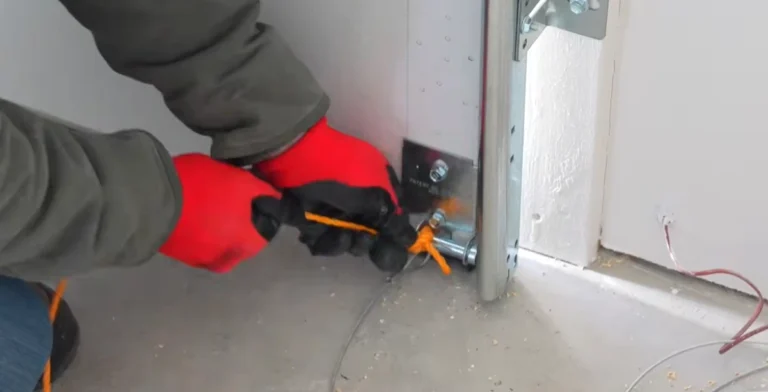
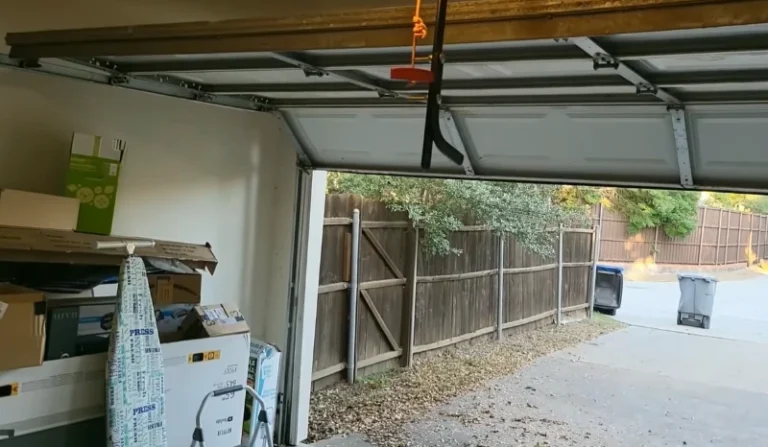
| The motor runs but the door does not move | The release cord was pulled, a stripped gear or trolley, a broken spring | Look at the release cord and pull it until the trolley clicks back in | Any spring, cable or gear work |
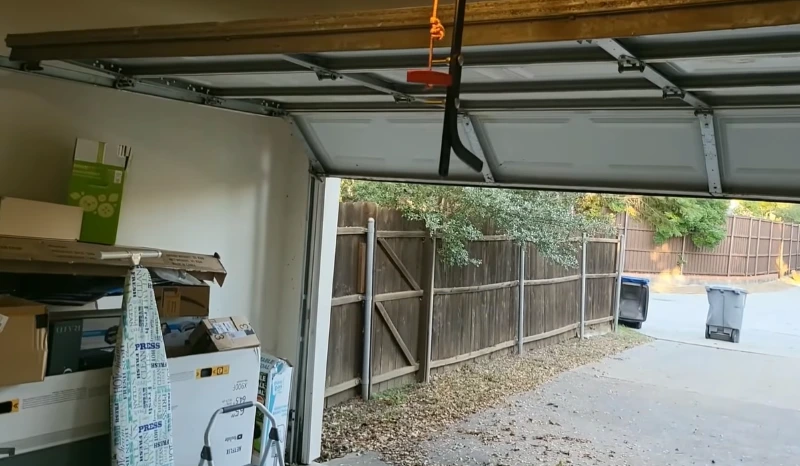
| The door opens partway and stops | Door out of balance, force or travel limits set wrong, loose chain or belt (Chamberlain) | Disconnect the opener and lift by hand only if the door is not damaged. Stop if it is heavy | Balance, which means springs, and internal opener settings |
| The door closes and then reverses | Blocked or misaligned photo eyes, a low force setting, an obstruction | Wipe both lenses, clear the path, check both sensor lights are steady | Force and travel adjustments |
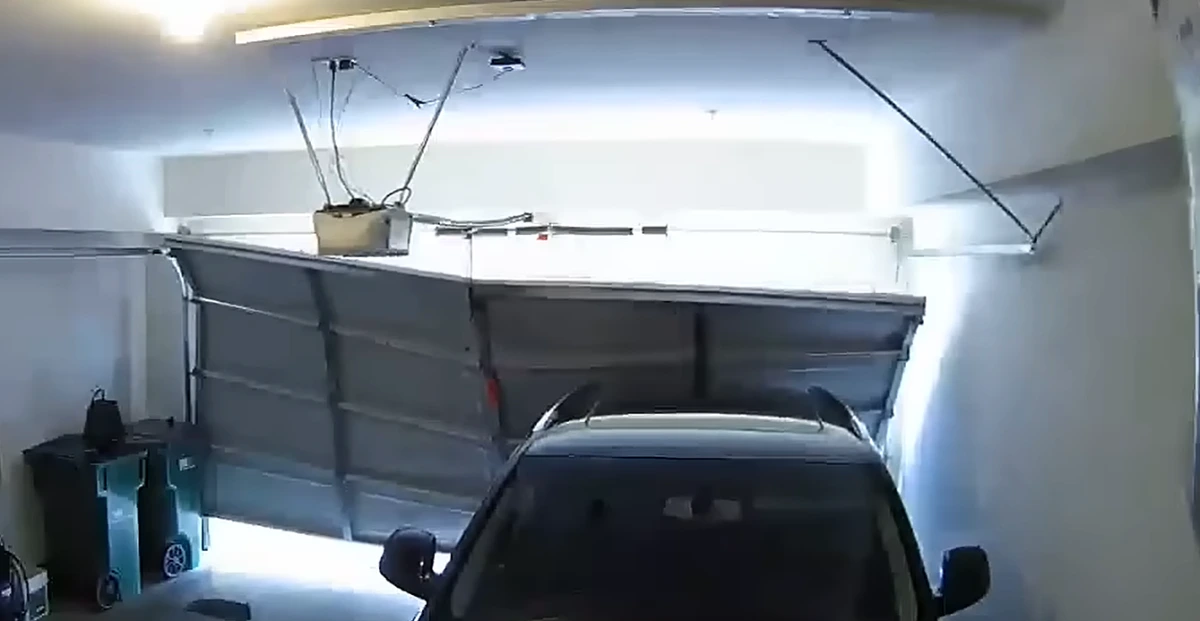
| The door is crooked or a roller is out | A roller off the track, loose track fasteners, a broken cable or spring | Stop. Disconnect the opener and keep clear | Cables, springs, bottom brackets and track straightening |
| A loud bang, then nothing | Family Handyman lists a broken torsion spring, and says to call a professional | Do not run the opener. Keep people and cars clear | Spring replacement |
| Grinding, squealing or clunking | Worn or rusted rollers, dry hinges, a worn opener motor | Listen for where it comes from. See the noisy door page | Motor failure and roller replacement at the bottom bracket |
Each symptom has its own page: will not open, will not close, sensors, remote and keypad, opener repair, off track and noisy door.
When the cold is the cause
Overhead Door says frost on photo eyes, metal tracks that contract and bind rollers, and cold stiffness that the opener reads as an obstruction can all stop a door from closing.
In a Minnesota winter, wipe frost and condensation off the photo eye lenses first. If the door still reverses, a technician can adjust force limits. Track alignment and travel limits are also technician work, per the same source. See winter care for the full cold-weather guide.
What blinking lights and codes mean
Opener diagnostic codes show as repeating flashes, such as four flashes, a pause and four again, or as up and down arrow flashes (Chamberlain). Meanings vary by model, so treat any count as a hint and check the manufacturer chart for your model, which is on the label on the motor unit. Common Chamberlain and LiftMaster codes are listed on garage door won’t close, and opener repair covers the fixes.
Where a homeowner should stop
Fine to check yourself
- Remote and wall button
- Batteries, plug, breaker and lock mode
- Photo eye lenses and obstructions
- The release cord and trolley
Leave to a technician
- Springs. DASMA calls them the most dangerous part of the door
- Cables, which DASMA says only a trained technician should replace
- Bottom brackets, which are under extreme tension
- A door that is crooked, heavy or will not stay up
DASMA also says never to put fingers between door sections when operating the door by hand, and that a door that does not go up and down smoothly needs service. See the safety guide.
Garage door not working: common questions
Why does my garage door open a few inches and stop?
Chamberlain lists door balance, force and travel limits and a loose chain or belt. A door that is heavy or sticking when lifted by hand is out of balance, which is a spring job.
Why does my door close and go back up?
Usually the photo eyes are blocked, dirty or out of line, or the force setting is too low.
Is it safe to lift the door by hand?
Only if the door is undamaged and moves easily. If it is heavy, crooked or will not stay up, stop and call.
What does a loud bang mean?
Family Handyman lists a broken torsion spring among the causes. Treat it as a reason to stop using the door.
Why is my door harder to close in winter?
Frost on the photo eyes and stiff, contracting metal can make the opener reverse. See the winter care guide.
Can I fix a broken spring myself?
No. DASMA says spring systems should be repaired only by trained professionals.
If you are unsure what you are looking at, call and describe it. Stop using the door if it is crooked, will not reverse or is heavy to lift.
Call about a garage door that is not working
Describe what the door is doing, when it started and what you have already tried.
What to have ready
- Your address and the nearest cross street
- What the door is doing, and any bangs or smells
- Door material and approximate age, if you know
- Photos of the broken part, if you can