Garage Door Repair Hugo MN › DIY or Pro
DIY Garage Door Repair: What Is Safe and What Needs a Pro
Some jobs are safe for a homeowner: cleaning and aligning the sensors, running the two monthly safety tests, lubricating moving parts and looking over the cables. Springs, cables and bottom brackets are not. The door makers’ trade group says spring systems should be repaired only by trained professionals.
Safe jobs sensors, tests, lube, a visual check
Pro only springs, cables, bottom brackets
Two tests run them every month
Sourced DASMA, CPSC, federal rule
Can you fix a garage door yourself?
Partly. Cleaning, aligning sensors, testing the auto-reverse, lubricating and inspecting are jobs a homeowner can do. Replacing or adjusting springs, cables and bottom brackets is not, because those parts are under high tension. DASMA, the door industry trade group, says only trained professionals should repair spring systems.
Most garage door trouble lands in one of two piles. The first pile is small and fixable: a sensor with a dirty lens, a door that grinds because nothing has been oiled in years, an opener that will not close because a beam is blocked. The second pile is the one that hurts people: a broken spring, a frayed cable, a door that came off its track. This guide sorts the jobs into those piles, with the manufacturer and safety sources behind each call.
Which garage door jobs are safe to do yourself?
| Job | Homeowner? | Why, and the source |
|---|---|---|
| Clean and align the photo-eye sensors | Yes | Chamberlain gives the steps. Disconnect power first. |
| Auto-reverse and photo-eye tests | Yes, monthly | Required by the federal rule for openers, and both Chamberlain and Genie tell owners to test. |
| Lubricate hinges, rollers and bearings | Yes, with care | Clopay and Amarr both list it as owner maintenance. The springs are under tension. |
| Look over cables and brackets | Look only | DASMA tells owners to inspect visually, not to adjust. |
| Replace or adjust springs | No | DASMA and Amarr say trained technicians only. |
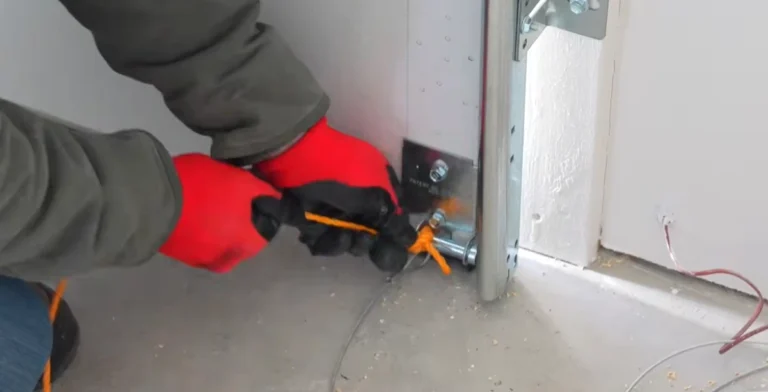
| Replace cables, adjust bottom brackets | No | DASMA: the brackets are under extreme tension. |
If a job is not on the rows marked yes in that table, the safe move is to stop and call. See spring repair, cable repair and off-track repair for what a technician does with each.
The two monthly safety tests anyone can run
Chamberlain says the safety reversal test must be run every month and after any adjustment. The federal rule for automatic openers, 16 CFR 1211.16, is the reason the test exists: the door has to reverse when it meets a 1½ inch object, or a 2 by 4 board laid flat. Both tests take a few minutes and need no tools.
The contact (auto-reverse) test
Lay a 2 by 4 flat on the floor in the middle of the doorway and close the door with the wall button. The door should touch the board and reverse; Genie says it should reverse within 2 seconds. If it keeps going down and crushes the board, the Consumer Product Safety Commission says to disengage the opener until it is adjusted as the manual describes, repaired or replaced, and to retest after every change. If the manual is missing, opener repair is the safer route.
The photo-eye (non-contact) test
With the door open, start it closing with the remote or wall button, then roll a ball through the beam near the floor. Genie says the door should stop, reverse and open. Chamberlain says the sensors on both sides should be mounted no higher than 6 inches above the floor. The full steps for both tests, and the balance test, are on the garage door safety tests page.
If the sensors are the problem
Chamberlain’s alignment steps start with disconnecting power. Each sensor has an LED: amber means sending, green means receiving. Loosen the wing nut on the receiving sensor, point the two lenses at each other and tighten it when the green LED glows steady. Two solid lights means the sensors are lined up. A blinking green light means they are misaligned or something is blocking the beam. Clopay adds that cobwebs, dirt and moisture on the lenses are common culprits, and wiping them takes a couple of minutes. If the door still will not close, see garage door won’t close and sensor repair.
The sources disagree slightly on the test object. Chamberlain’s page says a one-inch board or a 2 by 4 laid flat, while the federal rule and Genie say 1½ inches or a 2 by 4 flat. A 2 by 4 laid flat satisfies all of them, so use that.
How do you lubricate a garage door without making it worse?
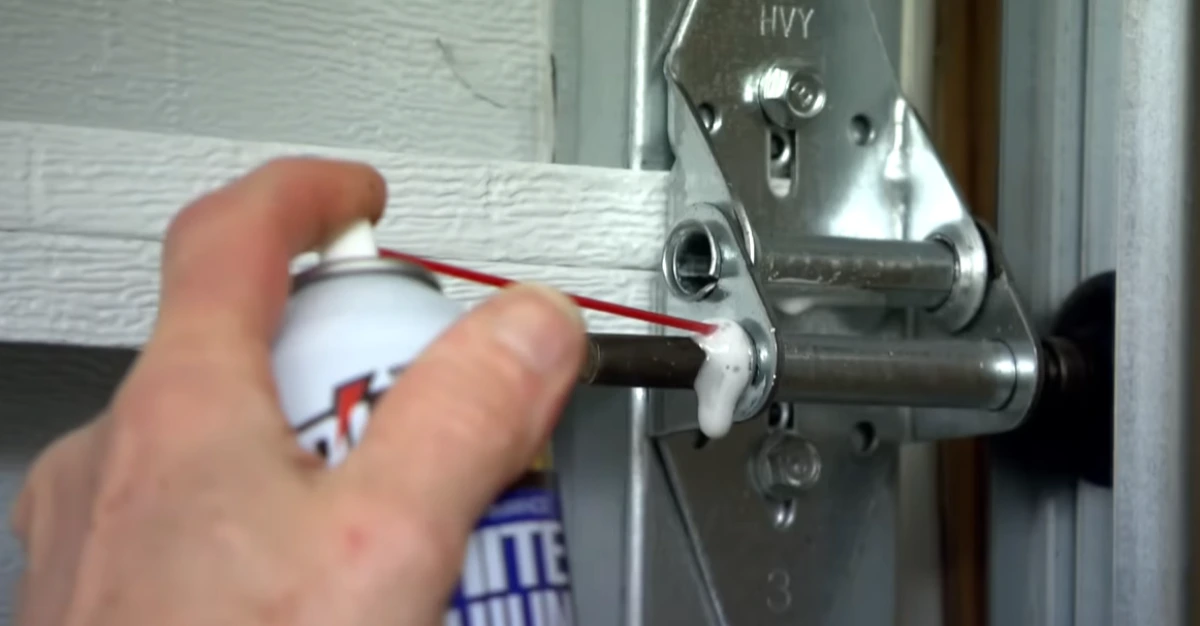
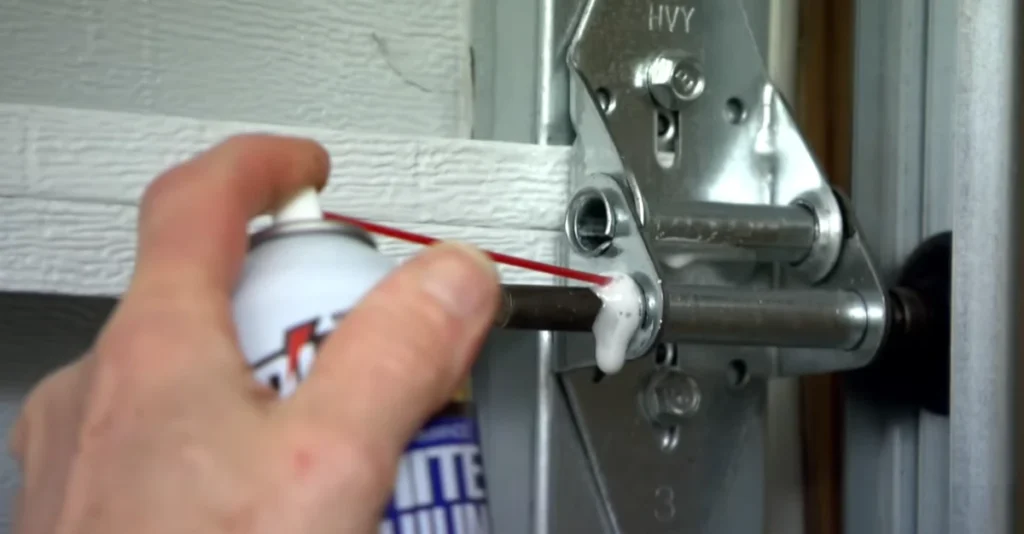
Clopay recommends lubricating hinge pins, roller bearings, the spring and its bearing plates, and pulleys every three to six months. It says not to lubricate nylon rollers or the surface of the track, and to skip oil-based sprays such as WD-40. Its pick is a silicone-based spray, with white lithium grease used sparingly.
Amarr’s owner’s manual takes a different view. It calls for a non-silicone lubricant, such as 10W-30 motor oil or Amarr’s own product, at least twice a year on the hinges, springs, rollers and bearings. Since the two makers disagree, follow the manual for your own door brand where you can find it. Spray from arm’s length and keep your hands away from the spring while you do it, because lubricating a spring does not mean adjusting one.
A Minnesota door company’s winter guide notes that ice can bond the bottom seal to the concrete after a melt and freeze, and suggests gentle heat instead of force. See garage door winter care for the full Hugo winter routine, or the tune-up page if you would rather someone else does the whole job.
What can you look at without touching?
DASMA tells owners to inspect the cables and the bottom brackets by eye, and warns that frayed cables are in danger of breaking. It also recommends monthly owner checks plus a yearly visit from a trained door systems technician. So looking is part of the homeowner job, and touching is not.
- Frayed or bunched strands on either cable, or a cable hanging slack.
- A gap in the spring coil above the door, or a stretched spring lying in the side track.
- A door that hangs crooked, or that sits lower on one side.
- A door that feels very heavy or drops when moved by hand. The CPSC says to detach the door from the opener and move it by hand, and to call a professional if it is unbalanced or binds. Detach it only with the door closed, and see how to open a garage door manually for the steps.
Any of those means a spring or cable job. Torsion vs extension springs shows what to look for, and why a garage door is not working covers the other common causes.
Why springs, cables and brackets are pro-only
DASMA says a garage door’s springs are arguably its most important and most dangerous part, and that spring systems should be repaired only by trained professionals. It says cables should be replaced only by a trained technician because of the spring tension, and that bottom brackets, which connect to the springs, are under extreme tension and should be adjusted or loosened only by a trained door systems technician. Amarr’s owner’s manual warns that high spring tension can cause serious injury or death, and tells owners not to remove, repair or adjust the springs, the red-colored fasteners, the cables or the hardware those fasteners are attached to.
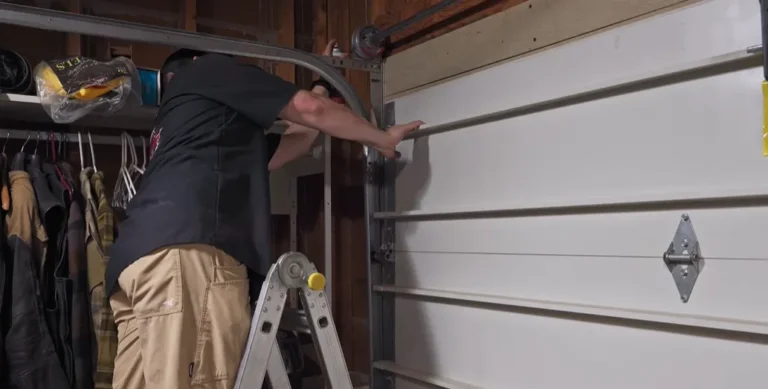
The door itself is heavy. A door company’s weight guide puts a steel double door at roughly 150 to 225 pounds, and wood or full-view glass doors weigh more. A second Minnesota company puts the range at 150 to 300 pounds or more, so publishers differ, but none of them describe a light door. When a spring lets go or a cable snaps, that weight is no longer being held.
The injury record is old but clear. The CPSC fact sheet says about 73 children aged 2 to 14 have been trapped and killed under automatic garage doors since March 1982, about three a year. A CPSC estimate quoted in a federal docket comment, based on 1990s data, put emergency room visits for garage door injuries at about 20,000 a year, including 190 finger amputations in 1996. Those figures are dated, and they cover all garage door injuries, not only spring work.
Stop and call if you see any of these
- A loud bang from the garage followed by a door that will not lift.
- A gap in the coil or a broken spring.
- A frayed or slack cable.
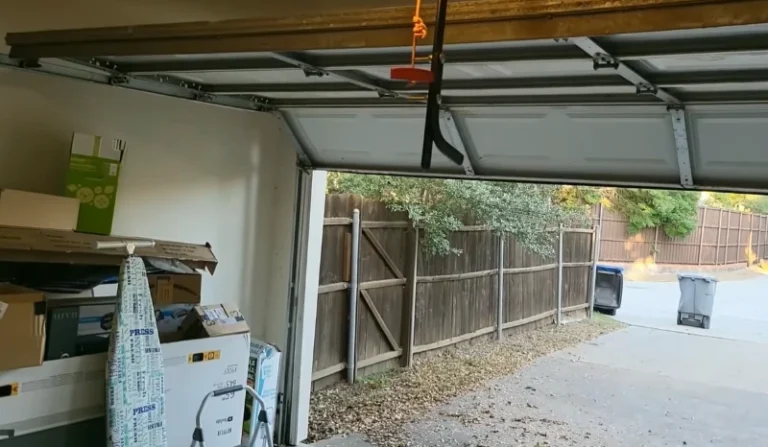
- A door out of its track, bowed at the top or hanging crooked.
- A door that will not stay where you leave it when moved by hand.
Keep people and cars clear of the door and do not try to lift it. Emergency repair explains what to say on the phone, garage door repair cost gives price ranges with named sources, and repair or replace helps when the door is old. If you are choosing who to call, read how to choose a garage door repair company first.
Is it legal to repair your own garage door in Minnesota?
Yes as far as licensing goes. The Minnesota Attorney General’s home building handbook lists homeowners doing work on their own homes among those excepted from contractor licensing. The same handbook warns that using workers who are not licensed can mean less protection if something goes wrong.
That answers the licensing question, not the safety one. The handbook says nothing about whether a homeowner should adjust a spring, and this is general information, not legal advice. For Hugo homeowners the practical rule is short: do the maintenance, run the tests, and leave the tension parts to someone who does them every week.
DIY garage door repair: common questions
Can I fix my garage door myself?
You can clean and align the sensors, run the monthly safety tests, lubricate the moving parts and inspect the cables and springs by eye. You should not replace or adjust springs, cables or bottom brackets, which DASMA says need a trained technician.
Is it safe to replace a garage door spring myself?
No. DASMA says spring systems should be repaired only by trained professionals, and the Amarr manual warns that high spring tension can cause serious injury or death. If your door has two springs, DASMA says to replace both even if only one broke.
How do I test my garage door’s auto-reverse?
Open the door, lay a 2 by 4 flat in the middle of the doorway, and close the door with the wall button. It should touch the board and reverse. Genie says within 2 seconds. Test every month.
What lubricant should I use on a garage door?
Clopay recommends a silicone-based spray and warns against oil-based sprays such as WD-40. Amarr’s manual calls for a non-silicone lubricant such as 10W-30 motor oil. The makers disagree, so follow the manual for your door, and keep the spray off nylon rollers and the track surface.
Why will my garage door not close after I cleaned the sensors?
A blinking green light on the receiving sensor means the sensors are misaligned or something blocks the beam. Chamberlain says they should sit no higher than 6 inches off the floor, and the green light should glow steady once they face each other. If it still fails, the wiring or the opener may be at fault.
Do I need a license to repair my own garage door in Minnesota?
The Minnesota Attorney General’s handbook lists homeowners doing work on their own homes as excepted from contractor licensing. It also says working with unlicensed people can mean less protection.
How much does a garage door weigh?
It depends on the material and size. One door company’s guide gives roughly 85 to 130 pounds for a steel single door and 150 to 225 pounds for a double, with wood and glass heavier. Another Minnesota company gives 150 to 300 pounds or more.
Sources
- DASMA, garage door safety tips
- DASMA, garage door systems safety
- Amarr residential owner’s manual
- CPSC garage door fact sheet
- 16 CFR 1211.16, inherent entrapment protection
- Genie, testing the reverse safety systems
- Chamberlain, testing the safety reversal system
- Chamberlain, aligning the safety sensors
- Clopay, lubricating garage door components
- Minnesota Attorney General, home building handbook
This guide is general information, not a substitute for your door’s manual. Sources were read in September 2026.
Not sure which pile your door is in?
Describe what you see and hear. If it involves a spring, a cable or a door out of its track, a Hugo technician can tell you what to do next.
What to have ready
- Your address and the nearest cross street
- What the door is doing, and when it started
- Door material and approximate age, if you know
- What you can see: broken parts, gaps, frayed strands