Garage Door Repair Hugo MN › Guides › Noise Guide
Garage Door Making Noise When Opening or Closing: What Each Sound Means
A squeak usually just needs lubricant. A grind, bang or pop is a different story. Match your door’s sound to the likely cause below, and find out which ones are safe to check yourself.
5 sounds squeak to hum, decoded
DIY or call a pro marked for each
Lubrication guide what to spray, what to skip
Sourced Clopay, Chamberlain, Genie, DASMA
Match the sound to the fix
Why is my garage door squeaking or creaking?
Clopay’s guide to fixing a noisy garage door points to "metal-on-metal contact between dried-out rollers and tracks" as the usual cause, along with worn rollers or hinges that have simply run out of lubricant.
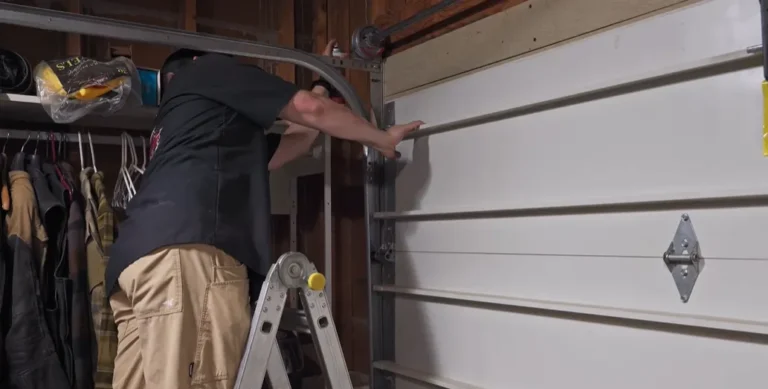
This is the easiest noise to fix yourself. Clopay recommends a silicone-based spray or white lithium grease on the hinges, the roller bearings (skip this step if your rollers are nylon), the springs, and the bearing plates, re-applied every three to six months depending on how often the door is used. The full steps are in the lubrication section below.
Why is my garage door grinding?
Clopay traces grinding to two different sources: "misaligned tracks force rollers to fight their way along the path, while worn gears in your opener can also grind." A grinding noise coming from the door itself is often a track problem; a grinding noise from the opener head is often the gears.
On screw-drive openers specifically, a grinding sound can also mean the motor is failing, the plastic drive gear has stripped, or the coupler that connects the motor to the rail has worn out, according to troubleshooting guidance for Genie screw-drive units. None of these are jobs to open up yourself, since a misjudged track adjustment can let the door bind or jump the track, and opener gear covers are not designed to be serviced live. Have a technician check track alignment and opener gears if lubrication does not resolve the sound within a day or two.
Why is my garage door banging, clanging, or popping?
Clopay is direct about this one: banging or clanging usually means "loose or broken hardware," and "broken springs make a particularly dramatic entrance." A popping sound is grouped with the same warning, with Clopay’s advice to "call a professional immediately" when it appears.
Torsion and extension springs hold enough stored tension to cause serious injury if they let go or are handled incorrectly, which is why every source in this guide treats spring work as a call-a-professional job, not a weekend project. If you hear a single loud bang and the door now feels heavy, hard to lift by hand, or won’t stay open partway, treat that as a likely broken spring and stop using the opener until it’s inspected.
Why is my garage door rattling?
Rattling is usually the least serious of the five. Clopay describes the cause as "loose hardware somewhere in the system — think bolts that have wiggled free over time, chain drives that need adjustment" — and recommends checking "every nut, bolt, and bracket" and tightening what has worked loose.
This is a safe DIY check: with the door closed and the opener unplugged, go over the track brackets, the hinges between panels, and the header bracket with a wrench, snugging anything that has backed out. If the rattle follows the chain or belt itself rather than the hardware, the drive may need its tension adjusted, which is covered in your opener’s manual.
Why is my garage door opener humming or buzzing?
Chamberlain’s support article on opener noises ties humming to a specific set of causes rather than general wear. On chain and belt drive openers, a hum can mean the springs are broken, the door lock (vacation mode) is activated, or the trolley is stuck on the stop bolt or stop tab. If the opener hums for about 30 seconds and then stops, Chamberlain says the trolley may not be connected to the door at all.
Screw-drive openers follow a similar pattern, with one addition: Chamberlain notes that if the unit "hums longer than five seconds," the drive rack may be stripped. A hum with no door movement is usually not a lubrication problem, so work through the door-lock and trolley-connection checks in your opener’s manual before assuming a part has failed.
Which noise means what?
| Sound | Likely cause | DIY or call a pro |
|---|---|---|
| Squeak or creak | Dry rollers, hinges, or springs | DIY — lubricate |
| Rattle | Loose bolts, brackets, or chain tension | DIY — tighten hardware |
| Grinding (from the door) | Misaligned track | Call a pro |
| Grinding (from the opener) | Worn gears, motor, or coupler | Call a pro |
| Bang or clang | Loose or broken hardware, possible broken spring | Call a pro |
| Pop | Broken or breaking spring | Call a pro immediately |
| Hum, no movement | Lock mode, stuck trolley, disconnected door, or (screw drive) stripped rack | DIY check first, then a pro if unresolved |
How do I lubricate a garage door correctly?
Clopay’s lubrication guide recommends a silicone-based lubricant or white lithium grease, applied to the hinge pins, the roller bearings, the torsion spring (its full length) or the pulleys on an extension-spring system, and the bearing plates.
- Do lubricate: hinges, metal roller bearings, springs, bearing plates.
- Do not lubricate: nylon rollers — Clopay is explicit that "if your rollers are nylon, do not apply lubricant."
- Do not lubricate: the tracks themselves. Clopay notes this "just makes it harder for the rollers to move" and attracts dust and debris instead.
- Re-lubricate every three to six months. Clopay suggests the shorter end of that range, three months, for doors used several times a day, and six months for average household use.
DASMA’s safety and maintenance guide for automatic garage door openers recommends folding this into a monthly routine: "monthly inspection and testing of your garage door and opener system," looking for "signs of wear or damage on hinges, rollers, springs, and door panels" while the door is disconnected from the opener, in addition to lubrication as needed.
Noise questions
Is it normal for a garage door to make any noise at all?
Some mechanical sound is normal on chain-drive openers and older doors. What isn’t normal is a change: a door that used to be quiet and has started squeaking, grinding, or banging is telling you something has changed, even if it still opens and closes.
Can I lubricate my garage door myself?
Yes. Lubricating hinges, metal rollers, springs, and bearing plates with a silicone spray or white lithium grease is a standard homeowner task, per Clopay’s guide. Skip nylon rollers and the tracks themselves.
My opener hums but the door doesn’t move. What does that mean?
Chamberlain lists a few specific causes: broken springs, the door lock (vacation mode) switch being on, the trolley stuck on a stop bolt, or the trolley not connected to the door. On screw-drive openers, a hum longer than five seconds can mean the drive rack has stripped.
Is a grinding noise from the opener dangerous?
It’s not an immediate safety hazard the way a spring is, but it usually means worn gears, a failing motor, or a worn coupler on a screw drive, per troubleshooting guidance for these units. Left alone, it typically ends in the opener failing rather than fixing itself.
What noise means a spring might be about to break?
A bang or a pop, especially a single loud one, is the sound Clopay associates with a spring failing. If the door also feels noticeably heavier to lift by hand afterward, treat it as a broken spring and stop using the opener until it’s inspected.
Sources
- Chamberlain Group support — garage door opener noises (humming causes)
- Clopay — How to Fix a Noisy Garage Door
- Clopay — How to Properly Lubricate Garage Door Components
- DASMA — Automatic Garage Door Opener Safety & Maintenance Guide
Note: Genie screw-drive grinding causes (stripped gear, worn coupler, motor wear) are referenced from third-party troubleshooting guidance rather than a Genie-published support article, since Genie’s own site did not have a dedicated noise-diagnosis page at the time of writing.
Hearing a grind, bang, or pop?
Those aren’t lubrication fixes. Call (651) 217-1271 and we’ll take a look, 24/7.