Garage Door Repair Hugo MN › Guides › Tracks Explained
Garage Door Tracks: How They’re Set and Why Alignment Matters
Garage door tracks are the steel rails that guide the door up the wall and back along the ceiling. Most homes use a 2-inch track, set plumb and square, and a door that catches, binds or jumps is often telling you the track has shifted, loosened or bent. Here is how the track is built, what alignment means, and which checks are safe to do yourself.
Three sections vertical, curved, horizontal
Clean, don’t oil per Clopay
Bent track means call a pro
Sourced Clopay and DASMA
What can you safely check on your tracks?
What are the parts of a garage door track?
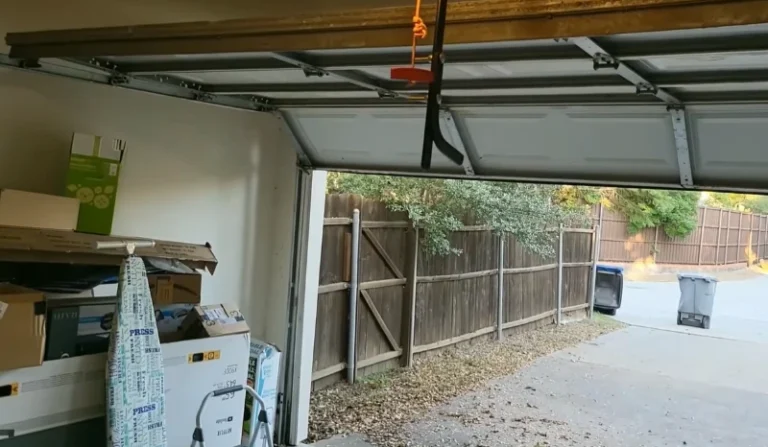
A track is one continuous path made of three kinds of section. Vertical track runs up each side of the opening. Horizontal track runs back along the ceiling. Between them sits what Clopay calls "the track radius, a curved piece of track section" that lets the door turn the corner smoothly. The rollers ride inside this channel, and the springs and cables do the lifting, so the track’s only job is to guide the door and hold it in line.
Residential tracks come in two widths. Clopay’s technical guide describes the 2-inch track as the standard choice for a single or double-car garage, and the 3-inch track as the more robust option for larger commercial or industrial doors. It adds that heavy-duty custom or wind-load doors get a heavy-duty 3-inch track. The width has to match the roller stem and the door’s weight, which is why DASMA advises that "the track and sections work together as a system" and that you should use the track designed for your specific door. An old track may not fit a new door.
How much room does each track layout need?
The curve of the track decides how much space the door needs above the opening and behind it. Clopay’s technical guide lists these clearances for the main residential layouts:
| Track layout | Headroom | Backroom |
|---|---|---|
| Standard radius | 12 to 18 inches | Door height + 16 inches |
| Low headroom | 4.5 to 9 inches | Door height + 23 inches |
| High lift | High lift + 9.5 inches | Door height + 18 inches |
| Follow roof pitch | Varies with the slope | Door height + 25 inches |
Clopay notes that low headroom solves low-clearance garages but uses a more complex dual-track system. For what installation day involves, see our garage door installation page.
Why does track alignment matter?
Clopay’s troubleshooting guide puts it first on its list of causes: "Misaligned tracks top the list. If the tracks are not perfectly aligned, the door can catch as it tries to move, leaving it stuck." A door that catches also loads the opener, the cables and the rollers unevenly, so a small shift can show up as noise, a crooked hang or a door that stops partway.
Clopay’s installation manual shows what "aligned" means to an installer. The tops of the two vertical tracks must be level with each other. The horizontal tracks are checked for squareness by comparing two diagonal distances, which should be within 1/2 inch of each other, and a horizontal track can be out of level by up to 1 inch from the front jamb to the rear hanger. Those are installer specifications for setting a new door, not a home adjustment procedure. The same manual warns that rear track hangers must be fastened with adequate screws because "door may fall and cause serious injury if not properly secured," and that sway braces keep the tracks from spreading.
Do not oil the track to quiet it. Clopay says to wipe the tracks with a damp cloth to remove dirt and debris, "but don’t add lubrication to the actual tracks," because that "just makes it harder for the rollers to move, forcing the opener to work harder." If a sound is the reason you are looking at the track, our noise guide matches each sound to its likely part, and the rollers guide covers the wheels that ride the track.
Which track problems are DIY and which need a pro?
| What you notice | DIY or call a pro | Why |
|---|---|---|
| Dirt, leaves or ice in the track | DIY | Clopay lists debris and winter ice as blockers; wipe with a damp cloth, no lubricant. |
| Track screws loose on the wall | DIY, carefully | Clopay says loose track screws can be tightened. Keep to screws only. |
| Door catches, binds or sticks on one side | Call a pro | Clopay says out-of-alignment tracks may need professional adjustment. |
| Bent or dented track | Call a pro | Clopay’s manual says to call an authorized professional dealer for a bent track. |
| Door has come off the track | Stop and call | It can drop without warning. See off-track repair. |
| Bottom bracket or track replacement | Call a pro | DASMA says bottom brackets are under extreme tension and should be adjusted only by a trained technician. |
When a track needs straightening or replacing, that is the work on our track repair page. If the door goes up but will not come down, or the reverse, see won’t go down or up, since a binding track is one of several causes.
Track questions
Should I lubricate my garage door tracks?
No. Clopay says to wipe the tracks clean with a damp cloth but not to add lubricant, because it makes it harder for the rollers to move and forces the opener to work harder. Lubricate the hinges and roller stems instead, following the manufacturer’s guidance.
What is the difference between a 2-inch and a 3-inch track?
Clopay describes 2-inch track as the standard choice for single and double-car residential garages, and 3-inch track as the more robust option for larger commercial or industrial doors and heavy-duty custom or wind-load doors. The track must match the door, so check before replacing it.
How do I know if my garage door track is misaligned?
Clopay says a misaligned track can make the door catch as it tries to move, leaving it stuck. Signs include a door that binds on one side, scrapes, or hangs crooked. If you suspect alignment, have a technician check it rather than loosening bolts yourself.
Can I tighten loose track bolts myself?
Clopay’s troubleshooting guide says to make sure the tracks are securely fastened and that loose screws can be tightened. Do not loosen or move the track or touch the bottom brackets, which DASMA says are under extreme tension and should be adjusted only by a trained technician.
Can a bent track be repaired?
Clopay’s manual says that if a track is bent you should call an authorized professional dealer. Whether it can be straightened or needs replacing depends on the damage, and DASMA notes a replacement track has to suit the door’s weight, section thickness and headroom.
Sources
- Clopay — Architect’s Technical Guide on Residential Garage Door Track Options and Measurements
- Clopay — Garage Door Installation & Maintenance instructions
- Clopay — Garage Door Troubleshooting Tips
- Clopay — How to Properly Lubricate Garage Door Components
- DASMA — Garage Door Safety Tips
Note: the squareness and levelness figures come from one Clopay installation manual for a specific door line and are installer specifications, not a universal rule or a home adjustment procedure. Clearance figures are Clopay’s and vary by manufacturer and door model.
Door catching, binding or off its track?
Tell us what the door is doing and we will say whether the track is the likely cause. Call (651) 217-1271, 24/7.